New
Thin-wall containers
Guide · Updated 29 September 2026
The number in the triangle names the plastic; it does not promise food grade. Whether a pack is safe for food depends on its material and on meeting the food packaging rules.
| Code | Plastic | Typical packaging | Notes for food |
|---|---|---|---|
| 1 | PET | Water bottles, sauce and oil bottles | Common for food; single use, not for hot filling |
| 2 | HDPE | Milk bottles, oil jerrycans, caps | Common for food; stronger and more heat-resistant than PET |
| 3 | PVC | Blisters, some cling films | BPOM advises against it for food |
| 4 | LDPE | Plastic bags, cling film, the lining of paper cups and pouches | Common for food, often as a lining |
| 5 | PP | Thinwall containers, cups, caps, straws | Takes heat and fat; for microwaving, use ones marked microwave-safe |
| 6 | PS | Styrofoam, rigid clear cups, plastic spoons | Do not microwave; a poor fit for hot and oily food |
| 7 | Other | Polycarbonate (PC) gallons, PLA containers | Depends on the material; choose ones labelled BPA-free |
The triangle code only names the plastic, so that waste can be sorted for recycling. A pack is food grade when its material, colours and additives are permitted in contact with food and do not move into the food beyond set limits.
In Indonesia, which materials may touch food and their migration limits are set in BPOM Regulation No. 11 of 2026 on Food Packaging, which replaced BPOM Regulation No. 20 of 2019. Plastic food packaging must also carry the food-contact logo (a glass and a fork) and its recycling code, under Minister of Industry Regulation No. 24/M-IND/PER/2/2010.
Not sure which to choose? The MaklonGo team helps match packaging to your product.
Chat with MaklonGo(opens in a new tab)4 products
Thin-wall containers
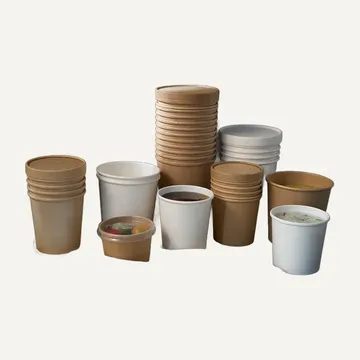
Cups & lids