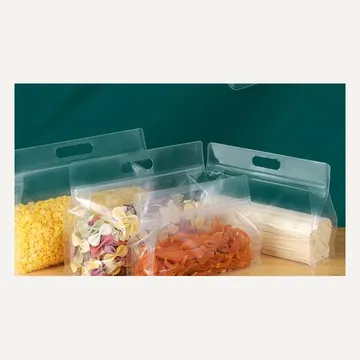
New
Stand-up pouches
Guide · Updated 29 September 2026
Choose the shape first, then a material that protects the contents well enough, then the size. The size table below helps you estimate from the fill weight.
| Type | Shape | Common for |
|---|---|---|
| Stand-up pouch (doypack) | Stands on its own thanks to a fold in the base | Ground coffee, snacks, drink powders, soap refills |
| Flat pouch | Flat, sealed on three sides, does not stand | Samples, sheet masks, seasonings, large sachets |
| Side-gusset pouch | Folds on both sides, top folded or sealed | Coffee beans, tea, rice |
| Flat-bottom (box) pouch | Flat base and five panels, stands upright like a box | Premium coffee, pet food, granola |
| Spout pouch | Comes with a spout and screw cap | Liquid soap and detergent refills, sauces, baby food |
A pouch is made of several films bonded together. The outer layer carries the print, the inner layer (usually PE) seals with heat, and the middle layer decides how well the pouch keeps out air, moisture and light.
| Material | Look | Protection | Suits |
|---|---|---|---|
| Aluminium foil (PET/AL/PE) | Silver, blocks light | Highest | Coffee, oily products, products that spoil with moisture or oxygen |
| Metallised (PET/VMPET/PE) | Silver inside | High | Coffee, snacks, powders |
| Foil- or metallised-lined kraft | Brown outside, silver inside | High | Coffee and tea with a natural look |
| Clear (PET/PE, BOPP/CPP) | Clear, printable | Medium: keeps moisture out, lets oxygen through | Dry snacks, products that should show |
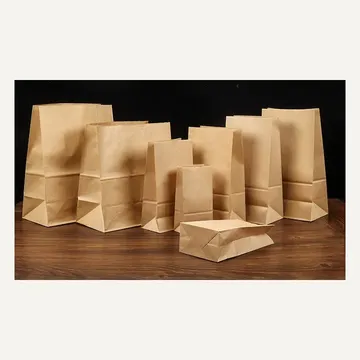
| Kraft (paper/PE) | Natural brown | Low: the paper is porous, only the inner film protects | Dry products used up quickly |
Foil can crack where it is folded sharply and often; metallised film flexes better and is enough for most coffee, snacks and powders. A matte finish is only a look: the protection still comes from the other layers.
Sizes are width × height in centimetres. The fill weights below are for ground coffee, summarised from the size charts of several Indonesian pouch makers, whose figures can differ widely.
| Size (cm) | Ground coffee, roughly |
|---|---|
| 10 × 15 | 50–70 g |
| 12 × 20 | 100–150 g |
| 14 × 22 | 200–250 g |
| 16 × 24 | 300–400 g |
| 19 × 27 | 500 g |
| 24 × 33 | 1 kg |
Denser products such as sugar, salt or flour fit about 1.5 to 2 times as much; light products such as crisps far less. The bottom gusset and the film’s thickness matter too. The surest way: ask for one or two sample sizes, fill them with your product, and leave room below the zipper or seal line.
See the options in the Pouches & Bags category: stand-up pouches, zipper pouches, spout pouches and kraft bags.
Not sure which to choose? The MaklonGo team helps match packaging to your product.
Chat with MaklonGo(opens in a new tab)4 products
Stand-up pouches
Stand-up pouches